Picking from the many types of capacitors can feel like guesswork when a circuit misbehaves. Match the job to the family: ceramic for decoupling, aluminum electrolytic for bulk storage, film for precision, tantalum for compact stable parts.
This page is one part of the wider topic of electronic components.
| Item | Value |
|---|---|
| Aluminum electrolytic capacitance range | 0.1 microfarads to 2.2 farads |
| Aluminum electrolytic rated voltage | 2.5 V to 700 V |
| Tantalum rated voltage (commercial parts) | 2 V to 500 V |
| MLCC capacitance loss from DC bias | Up to 80% at rated voltage |
| Bulk aluminum electrolytic lifespan | 10,000 hours at 105°C |
| PPS film capacitor stability limit | Up to 150°C |
The figures come from LCSC’s capacitor overview and eTechnophiles’ capacitor guide. Part ranges and ratings change, so check the source before you rely on them.
What separates the main types of capacitors?
The dielectric and construction decide most of a capacitor’s character. The JLCPCB capacitor guide says the family determines capacitor range, voltage rating, ESR, stability, size and whether the part is polarized.
If you need the physics of charge storage first, this explainer on how do capacitors work covers it before you pick a family.
The same guide lists the families you will meet most often:
- Ceramic (MLCC)
- Aluminum electrolytic
- Polymer
- Tantalum
- Film
- Supercapacitor
- Mica
- Trimmer and variable
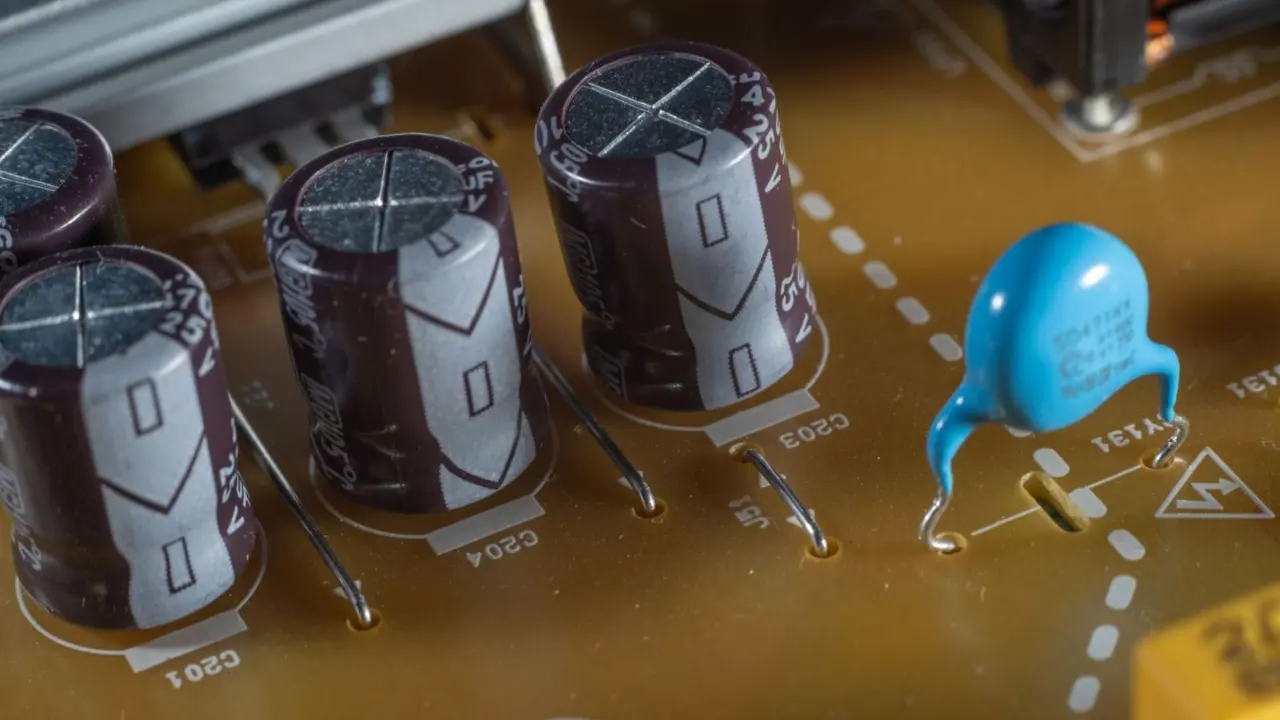
Polarity is the first practical split. Vedantu’s overview says ceramic, film, paper, mica and air capacitors are nonpolar, while aluminum electrolytic, tantalum, conductive polymer and electric double layer capacitors have a marked positive terminal.
Orientation matters for the polar group. eTechnophiles notes that these parts get damaged if the polarity is reversed.
Ceramic capacitors for decoupling and high frequency
Ceramic capacitors use a ceramic dielectric and suit high-frequency work. Electricity Forum says they are commonly used in decoupling, bypassing and coupling applications.
They split into classes. The same page says Class 1 parts serve circuits that need high precision and stability, while Class 2 parts serve circuits that need high capacitance values.
LCSC’s overview describes Class I (C0G/NP0) as ultra-stable with low loss, and Class II (X7R/X5R) as offering high volumetric efficiency. The trade-off is DC bias: LCSC says capacitance can drop by up to 80% at rated voltage.
In practice, a Class II part rated for a value on its label may deliver much less in a powered circuit. Check the manufacturer’s bias curve, or choose a higher voltage rating, when the capacitance value matters.
Aluminum electrolytic, tantalum and polymer capacitors
Aluminum electrolytics are the usual answer when you need a lot of capacitance cheaply. eTechnophiles explains that the oxide layer is very thin, which makes very high capacitance possible, and lists a range of 0.1 microfarads to 2.2 farads with rated voltages from 2.5 V to 700 V.
The costs are higher ESR and a limited life. Vedantu says the electrolyte evaporates over time, and LCSC says electrolytics degrade rapidly above 105°C, while bulk parts in server power supplies reach 10,000-hour lifespans at 105°C.
Tantalum capacitors trade capacity for stability and size. Electricity Forum says tantalum electrolytics have higher stability and lower leakage current than aluminum ones.
eTechnophiles lists commercial tantalum parts from 10 nF to 100 mF and from 2 V to 500 V. Treat their failure mode seriously: Vedantu warns that failure can lead to short circuits and fire risk.
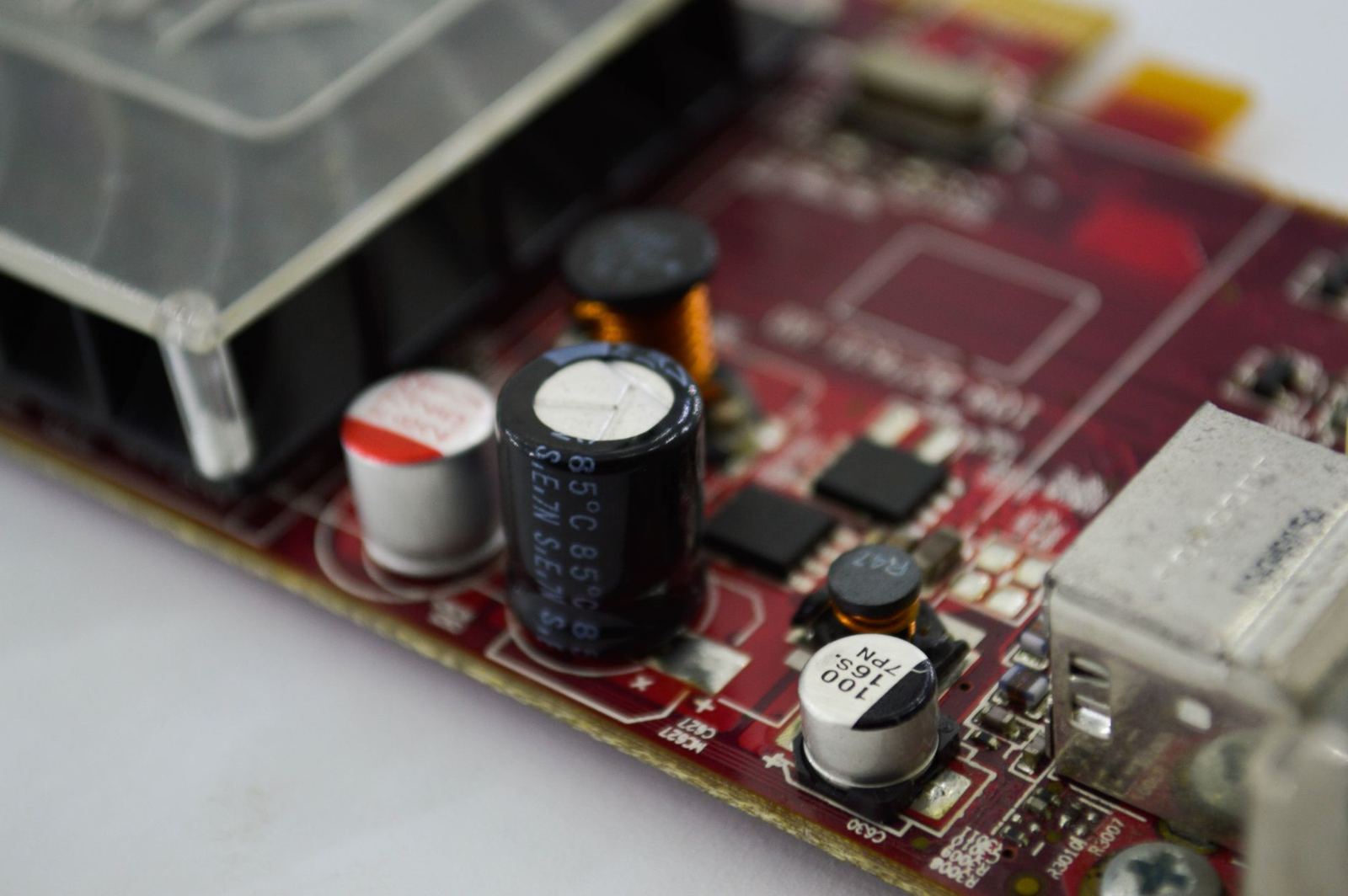
Conductive polymer capacitors sit between the two for power rails. According to Vedantu, the solid polymer electrolyte gives high conductivity and low ESR, which helps with ripple absorption. The catch is higher cost and no use at high voltage.
A quick comparison:
- Aluminum: highest capacitance per cost, higher ESR, shorter life.
- Tantalum: smaller and stable, but sensitive to misuse.
- Polymer: low ESR for ripple, but limited voltage and higher price.
Film and mica capacitors for precision circuits
Film capacitors are nonpolar, stable and accurate, with a long lifespan and strong temperature characteristics, according to Vedantu. The page lists PET, PP, PPS and PEN as the common dielectrics, each with its own strengths.
Two choices come up often. LCSC says polypropylene has low loss and suits snubber circuits, while PPS stays stable up to 150°C and is used in EV traction inverters.
Mica capacitors are the specialist option. Electricity Forum says silver mica parts are known for high precision, low losses and excellent stability, and that they are used in RF circuits, filters and timing applications.
Supercapacitors and variable capacitors
Supercapacitors, also called electric double layer capacitors, store energy at the boundary between electrode and electrolyte. Vedantu says their capacity is much higher than typical electrolytics but below secondary batteries.
That profile suits backup and rapid charge and discharge. The same page says they can supply backup power for memory applications.
Variable capacitors let you adjust capacitance. Vedantu describes their use for frequency tuning in radios and one-time circuit calibration, which is where trimmers appear in practice.
How to choose a type for your circuit
Start from the job, then check the limits. The JLCPCB guide frames the question as which type and what value, not which brand.
Work through these steps:
- Decide whether the circuit can respect polarity, which rules out or allows the polar families.
- Match the function: decoupling points to ceramic, bulk smoothing to aluminum electrolytic, precision timing or filtering to film or mica.
- Check the voltage rating and, for ceramics, the capacitance lost to DC bias.
- Check temperature, since electrolytics age quickly when hot.
- Check ESR and size against the space and ripple your supply needs.
Capacitors are components of filters and tuned circuits, according to Electricity Forum. A primer on what is an inductor covers the companion part you will often pair with them.
Frequently asked questions
Which types of capacitors are polarized?
Show answer
Aluminum electrolytic, tantalum, conductive polymer and electric double layer capacitors have a marked positive terminal, according to Vedantu. Ceramic, film, paper, mica and air capacitors are nonpolar.
What happens if you fit a polarized capacitor backwards?
Show answer
It can be damaged. eTechnophiles says polarized parts get damaged if the polarity is reversed.
Why does a ceramic capacitor deliver less than its label?
Show answer
DC bias is the usual cause. LCSC says capacitance can drop by up to 80% at rated voltage in MLCCs.
Which type suits memory backup?
Show answer
An electric double layer capacitor. Vedantu says these provide very high capacity and can supply backup power for memory applications.
Which type suits RF and timing work?
Show answer
Mica and film are the usual precision choices. Electricity Forum says silver mica capacitors are used in RF circuits, filters and timing applications.